
Nairobi’s streets were alive on June 25, 2024. The air thrummed with chants, the beat of protest anthems, and the defiant spirit of Kenya’s youth. Thousands of Gen Z Kenyans, joined by parents, workers, and students, flooded the Central Business District, their faces painted with the colours of the Kenyan flag—red, green, and black. They called themselves Gen Zote, meaning “all of us,” a generation united against the Finance Bill 2024. This was no ordinary protest. It was a cry for a future unburdened by taxes on bread, sanitary pads, and dreams.
Among the crowd was Achieng, a 22-year-old software engineering student at the University of Nairobi. Her black cap, emblazoned with #OccupyParliament, bobbed in the sea of placards. Beside her was Kevin, her childhood friend from Kibera, a 25-year-old butcher who’d shut his market stall to march. The Finance Bill felt like a betrayal in Kibera, where the cost of living squeezed families dry. “This isn’t just about today,” Achieng said, gripping her Kenyan flag. “It’s about tomorrow.”
Kevin nodded, his eyes fierce. “If we don’t stop this, they’ll tax us for breathing.”
A Carnival Turned Tragedy
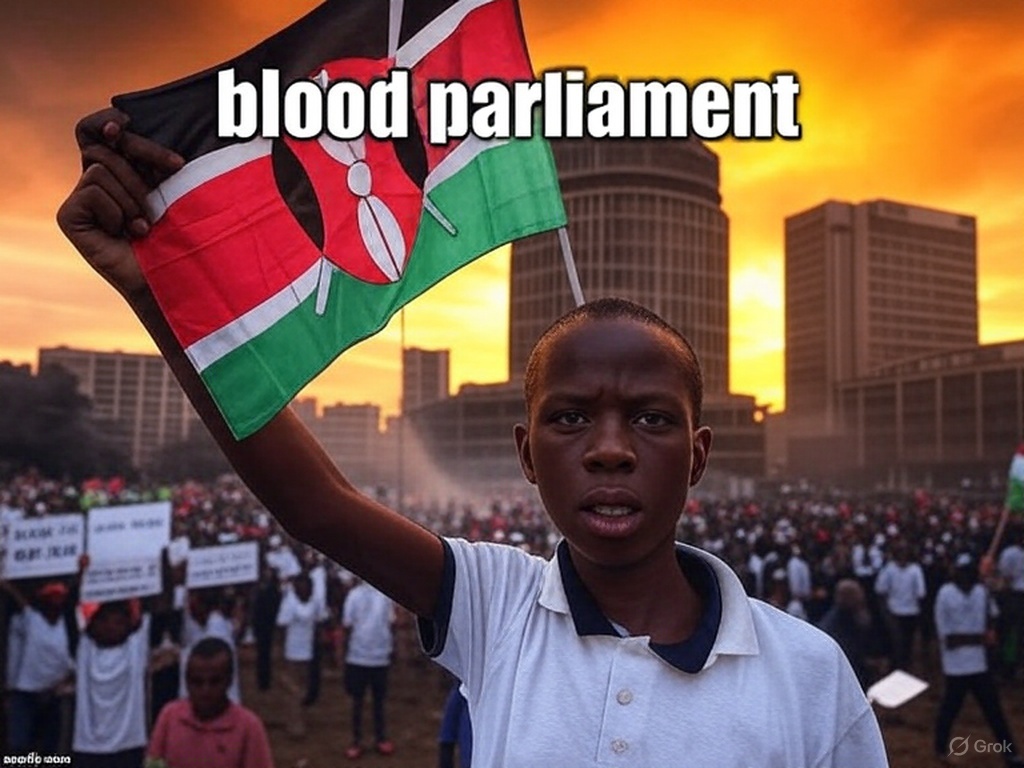
The Blood Parliament
The protests began with hope. Organised on TikTok, X, and Instagram, young Kenyans had rallied for weeks under hashtags like #RejectFinanceBill2024. Achieng translated the bill’s clauses into Luo for her rural relatives, while Kevin shared videos exposing MPS’ lavish lifestyles—gold watches and SUVS funded by public coffers. By noon, the crowd swelled outside Kenya’s Parliament, where the bill faced its final vote.
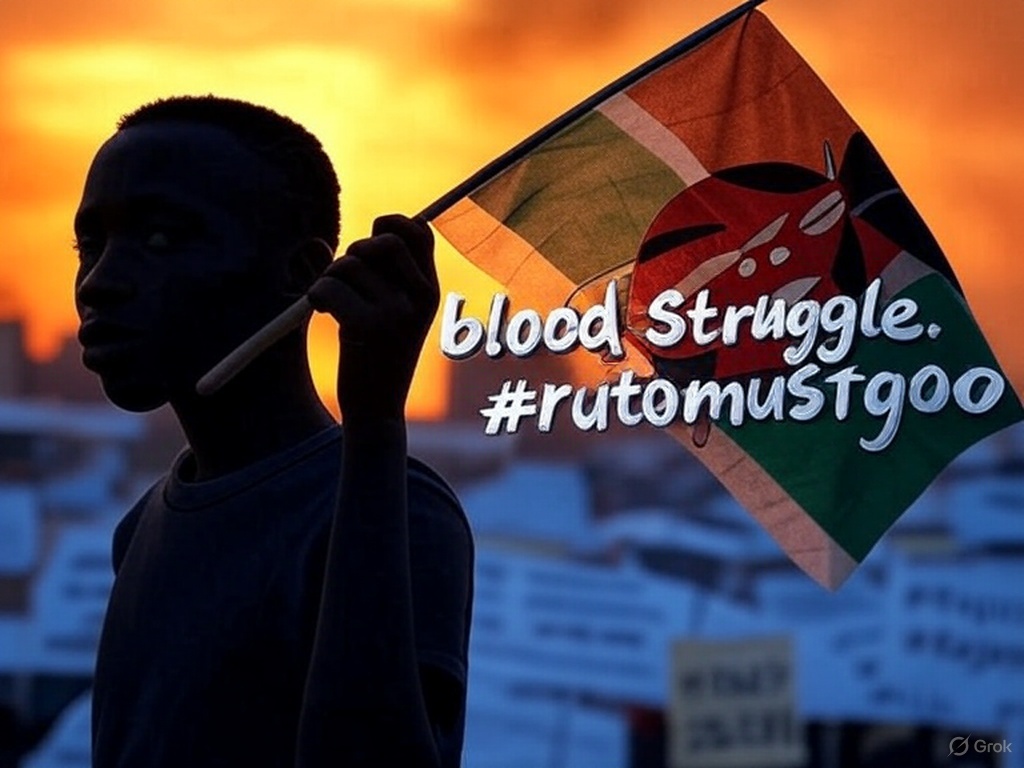
At 2:14 PM, the news broke: the bill passed, 195 to 106. The crowd roared in disbelief. “They’ve betrayed us!” someone shouted. Achieng’s heart sank, but Kevin urged her forward. “They need to see us.” The protesters surged, breaching parliament’s gates near the Jomo Kenyatta Mausoleum. Some tore down fences; others set a police truck ablaze. Inside, chaos erupted—dining halls ransacked, the Senate Chambers vandalised, and the ceremonial mace stolen.
Achieng hesitated, tear gas stinging her eyes. “Kevin, this is getting dangerous,” she warned. But the crowd’s momentum carried him forward. Then came the gunfire—sharp, terrifying pops. “Live rounds!” a protester screamed. The carnival atmosphere shattered. Achieng’s TikTok livestream captured her panic: “They’re shooting at us!”
Near the parliament’s edge, Kevin fell, a bullet tearing through him as he helped another protester. Achieng dropped beside him, her hands trembling over his wound. “Stay with me,” she sobbed, but it was too late. Nearby, a student journalist waved a Kenyan flag, shielding another fallen body. The Kenya National Commission on Human Rights later reported 39 deaths nationwide that day, 19 in Nairobi alone. Among them were David Chege, a 39-year-old software engineer, and Ericsson Mutisya, a 25-year-old like Kevin.
The Truth in the Smoke
BBC Africa Eye’s investigation revealed a chilling truth: a Kenya Defence Forces soldier, identifiable by his upturned neck guard, fired into the crowd. Another officer shouted “Uaa!” as he shot. Security forces even targeted a medical camp for the wounded, firing tear gas and rubber bullets. The parliament burned, its flames a symbol of a nation pushed to the brink.
That evening, President William Ruto called the protesters “organised criminals” and praised security forces for defending “sovereignty.” But the blood on parliament’s steps told a different story. The next day, June 26, Ruto vetoed the Finance Bill, bowing to public pressure. “The people have spoken,” he said. For Achieng, the victory was hollow. Kevin was gone, one of dozens killed, and no officer had faced justice.
A Generation’s Resolve
Weeks later, Achieng sat in her Kibera room, scrolling through X posts under #TotalShutDownKenya. A GeoPoll survey showed 62% of Kenyan youth joined the protests, driven by unemployment (89%), corruption (84%), and the cost of living (82%). One post from
@ebujuri read: “Peaceful Gen Zs were killed outside Parliament on June 25th… Young Kenyans asking for a better future, met with bullets.”
Achieng’s last TikTok livestream had gone viral, flooded with comments: “We won’t forget Kevin.” “#RejectFinanceBill2024.” “Kenya WILL change.” Wiping tears, she posted: “They took my friend, but they can’t take our fight. For Kevin, for all of us, we keep going.”
Why This Matters
The blood of parliament wasn’t just a tragedy—it was a turning point. Kenya’s Gen Zote showed the world that a generation can rise, armed with smartphones and courage, to demand accountability. But the fight isn’t over. Human rights groups still demand arrests for the June 25 killings. The cost of living still chokes families. And hashtags alone won’t rewrite Kenya’s future.
We honour Kevin, David, Ericsson, and others by keeping their stories alive. Share this post. Join the conversation on X with #GenZote or #RejectFinanceBill2024. Demand justice for the fallen. Because, as Achieng said, “This is about tomorrow.”
What’s your take? Have you seen a change since June 25? Drop a comment below or share your story. Let’s keep the fight alive.
Sources: This post draws on reports from BBC Africa Eye, Al Jazeera, Human Rights Watch, and the Kenya National Commission on Human Rights. Character names and specific interactions are fictional but inspired by real accounts of the protests.
Related Posts
- How to Start a Mahindi Choma Business in Nairobi: Ksh 5,000 Daily Profit
- Kenya’s 2026 Pay Comparison: TSC Grade C3 vs. PSC and Parastatals

- Where to Invest in Kenya 2026: Top 5 High-Return Sectors & Business Opportunities

- How to Start a Butchery Business in Kenya: Costs, Licences, and Tips (2026)

- U.S. Airstrikes in Nigeria: Geopolitical Manoeuvre or Resource Grab?

- How to Start a Profitable Salon in Kenya (2026): Costs, Licences, and Requirements

- The Difference Between Hospitality and Entertainment Establishments Under Kenyan Law

- Is Ruto’s Handout Economy Hijacking Kenya’s Future? Why Patronage Over Progress Spells National Disaster.

- SHA: Emergency Evacuation and International Referrals – Access to Critical Care

- SHA: Dental and Optical Benefits – Caring for Your Smile and Vision
- SHA: Maternity Coverage – Comprehensive Care for Growing Families
- SHA: Outpatient Benefits Decoded – Your Day-to-Day Medical Coverage
- SHA: Inside Your Inpatient Coverage – Hospital Care Benefits Explained
- SHA: Your Benefits Breakdown – What Every Teacher Gets Based on Job Group
- TSC Unveils Comprehensive Medical Cover for All Teachers Starting December 2025
- Tragedy Strikes KJSEA Marking Exercise as Examiner Dies at Machakos Girls High School
- Shadows of Empire: How the West Maintains Control in Africa

- Why Senator Okiya Omtatah Wants to Abolish the Bomas National Tallying Centre (And Why It Matters for 2027)

- What to Study Now for a Successful Career in Kenya’s Future (2026-2050)

- AUDIT SHOCK: Only 3,000 Schools Get Capitation Funds as Govt Cracks Down on “Ghost Students”

- TSC’s Promotion Blueprint: How Teachers Earn Their Next Grade