

The Art of Deception: Comparing Pathological Lying in Leadership – Ruto, Trump, and Historical Lessons
Introduction
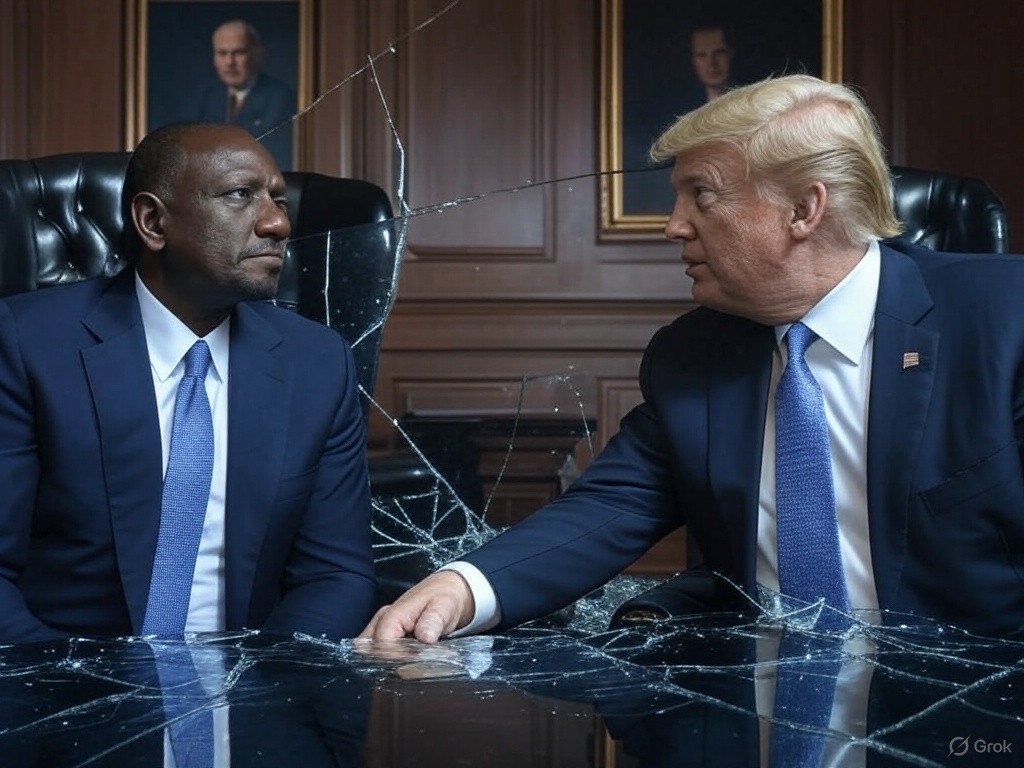
Leadership demands trust, but what happens when leaders habitually distort the truth? In recent years, Kenya’s President William Ruto and former U.S. President Donald Trump have faced accusations of pathological lying, with critics arguing their falsehoods undermine governance. From Ruto’s unfulfilled economic promises to Trump’s staggering tally of false claims, their behaviors raise questions about why some leaders lie compulsively and what history teaches us about such figures. This blog explores the psychology of pathological lying in leadership, compares Ruto and Trump through specific examples, and draws on historical precedents to assess their impact.
The Psychology of Pathological Lying in Leaders
Pathological lying—habitual, often motiveless deception—can stem from personality disorders like narcissism or psychopathy, or from learned behavior reinforced by power. Psychologists note that narcissistic leaders lie to inflate their image or dodge accountability, while those with psychopathic traits may lie impulsively, indifferent to consequences. For some, lying is strategic, a tool to manipulate narratives or maintain control. But when does this cross into pathology, and what drives leaders to risk credibility?
Case Study 1: William Ruto’s Promises and Public Distrust
Since taking office in 2022, Kenyan President William Ruto has faced accusations of lying about economic reforms and governance. A prominent example is his 2022 campaign promise to lower living costs and stabilize the Kenyan shilling. Ruto claimed his “bottom-up” economic model would create jobs and reduce taxes. Yet, by 2024, fuel prices soared, taxes increased, and the shilling weakened, sparking protests. Critics, including former Deputy President Rigathi Gachagua, labeled Ruto a “pathological liar” after a 2025 interview where Ruto allegedly fabricated details about their fallout, including claims Gachagua demanded KSh 10 billion for political loyalty. Gachagua’s retort on X—“pathological lying is a mental disorder”—reflects public frustration.
Ruto’s defenders argue his exaggerations are political rhetoric, not pathology, and that economic challenges are global. However, repeated unfulfilled promises, like the 2023 pledge to deliver 1 million jobs annually, erode trust. Social media on X shows Kenyans mocking Ruto’s claims, with hashtags like #RutoMustGo trending in 2024. This suggests a pattern of overpromising that borders on compulsive, possibly driven by a need to maintain populist appeal.
Case Study 2: Donald Trump’s Avalanche of Falsehoods
Donald Trump’s presidency (2017–2021) set a benchmark for documented deception. The Washington Post tallied 30,573 false or misleading claims over his first term, averaging 21 per day. Examples include his 2020 election fraud claims, dubbed the “Big Lie,” which fueled the January 6 Capitol riot. Trump repeatedly asserted he won the election, despite recounts and court rulings proving otherwise. Another notable falsehood was his 2017 claim that his inauguration crowd was the largest ever, contradicted by photos and official estimates.
Trump’s lies often served self-aggrandizement or deflection. He boasted of “the biggest tax cuts in history” (false) and dismissed COVID-19’s severity, claiming it would “disappear.” His former chief of staff, John Kelly, called him a “pathological liar,” and mental health experts like Dr. Bandy Lee noted his lies lacked the strategic purpose of past presidents, suggesting a compulsive trait. Trump’s repetition of falsehoods, like the election fraud narrative, exploited the “illusory truth effect,” where repeated lies gain believability.
Historical Context: Lessons from Past Liars
History shows that lying leaders are not new, but their motives and impacts vary. Lyndon B. Johnson’s 1964 Gulf of Tonkin incident, a fabricated attack on U.S. ships, justified Vietnam War escalation, costing millions of lives. Unlike Trump or Ruto, Johnson’s lie was strategic, tied to national security, though catastrophic. Similarly, Richard Nixon’s Watergate cover-up involved lies to protect power, but his resignation showed accountability absent in modern cases.
In contrast, Ronald Reagan’s falsehoods, like claiming trees caused more pollution than cars, stemmed from detachment rather than malice. These historical figures highlight a spectrum: strategic lies (Johnson), self-serving lies (Nixon), and careless exaggerations (Reagan). Ruto and Trump lean toward the self-serving and compulsive, with Trump’s volume and Ruto’s populist overpromises distinguishing them.
Comparing Ruto and Trump
- Volume and Style: Trump’s lies are more frequent and blatant, averaging 21 daily falsehoods, while Ruto’s are fewer but tied to specific promises. Trump’s style is bombastic, often absurd (e.g., claiming he never said “lock her up” despite recordings), while Ruto’s are aspirational, promising unfeasible economic miracles.
- Motivation: Both lie to bolster their image. Trump’s falsehoods often protect his ego (e.g., crowd sizes) or sow division (e.g., election fraud). Ruto’s aim to sustain populist support, promising jobs and tax cuts despite fiscal realities. Both show narcissistic traits, prioritizing self-preservation over truth.
- Impact: Trump’s lies had global consequences, undermining U.S. democracy via the Capitol riot. Ruto’s erode domestic trust, fueling protests and economic discontent. Both destabilize, but Trump’s disinformation scale, amplified by media, outstrips Ruto’s localized impact.
Are They Good Leaders?
Good leadership requires integrity, vision, and results. Pathological lying undermines all three. Ruto’s economic mismanagement and broken promises suggest ineffective governance, though his supporters credit his infrastructure projects. Trump’s tax cuts and foreign policy wins earned loyalty, but his lies fractured trust and polarized the U.S. Historically, leaders like Franklin Roosevelt lied strategically (e.g., hiding WWII preparations) but delivered results. Ruto and Trump’s lies, often self-serving, lack such justification, making them poor leaders by ethical standards.
Why Do They Lie?
- Inherited or Upbringing? No evidence confirms genetic lying, but narcissistic traits have a heritable component. Trump’s father, Fred, lied about his Swedish heritage, a falsehood Donald repeated. Ruto’s background as a self-made politician suggests learned behavior, possibly from Kenya’s patronage-driven politics.
- Fear of Truth? Both avoid accountability. Trump’s election fraud lies dodged defeat, while Ruto’s job promises deflect economic failures. Their lies shield vulnerabilities, a hallmark of narcissistic leadership.
- Cultural Enablers: Weak accountability—Kenya’s corrupt systems, U.S. partisan media—emboldens lying. Trump’s base embraced his “sincerity” over facts, while Ruto’s supporters tolerate exaggerations for tribal loyalty.
Conclusion
Ruto and Trump exemplify how pathological lying can define leadership, but history warns of its dangers. From Johnson’s Vietnam disaster to Nixon’s downfall, lies erode trust and destabilize societies. Ruto’s broken promises and Trump’s disinformation campaigns show that compulsive deception, whether narcissistic or strategic, undermines effective governance. For citizens, the lesson is clear: demand accountability and skepticism, lest democracy becomes, as Hannah Arendt warned, a place where “nobody believes anything anymore.”
Call to Action
Have you noticed similar patterns in other leaders? Share your thoughts below, and let’s discuss how we can hold power to account. For more on leadership and truth, subscribe to our newsletter!
Sources
- The Washington Post Fact Checker on Trump’s false claims.
- TUKO.co.ke on Ruto-Gachagua fallout.
- Historical analyses from The Nation and The Conversation.
- Psychological insights from Forbes and Psychoanalyzing Life.
Note: This blogpost critically examines public accusations and documented evidence, avoiding unverified claims. Dates and examples are accurate as of April 19, 2025.
- How to Start a Mahindi Choma Business in Nairobi: Ksh 5,000 Daily Profit
 Spread the loveProfitable Mahindi Choma Business in Nairobi: The Ultimate 2026 Guide Introduction In the heartbeat of Nairobi—from the busy pavements of Upper Hill to the crowded stages of Embakasi—one scent reigns supreme: Mahindi Choma. While others look for complex tech startups, smart entrepreneurs are looking at the grill. The roasted maize business is a…
 - Where to Invest in Kenya 2026: Top 5 High-Return Sectors & Business Opportunities
 Spread the loveBest Performing Sectors and Investment Opportunities in Kenya: 2026 Strategic Guide Executive Summary Kenya’s economy has demonstrated remarkable resilience since 2023, with GDP growth stabilizing at 4.7% in 2024 despite global headwinds and domestic fiscal pressures. This comprehensive analysis examines the top-performing sectors, identifies emerging investment opportunities, and provides actionable strategies for entrepreneurs…
 - How to Start a Butchery Business in Kenya: Costs, Licences, and Tips (2026)
 Spread the love How to Start a Butchery Business in Kenya: Costs, Licenses, and Tips (2026) Starting a butchery in a major Kenyan city like Nairobi, Mombasa, or Kisumu is a classic high-reward venture. While the demand for protein is constant, the urban consumer in 2025 is more discerning than ever, prioritizing hygiene, convenience, and…
 - U.S. Airstrikes in Nigeria: Geopolitical Manoeuvre or Resource Grab?
 Spread the love Christmas Strikes in Sokoto Humanitarian Rescue or the New “Scramble for Africa”? The peaceful silence of Christmas Day 2025 was shattered in Northwest Nigeria, not by celebration, but by the roar of American Tomahawk missiles. In a move that has sent shockwaves from Abuja to Washington, the U.S. launched targeted airstrikes against…
 - The Difference Between Hospitality and Entertainment Establishments Under Kenyan Law
 Spread the love The Difference Between Hospitality and Entertainment Establishments Under Kenyan Law In Kenya’s vibrant economy, the hospitality sector is a major pillar. However, for entrepreneurs and travelers alike, the legal lines between a “Hotel,” a “Villas,” or a “Nightclub” can be blurry. In the eyes of the law—specifically the Tourism Act and the…
 - Is Ruto’s Handout Economy Hijacking Kenya’s Future? Why Patronage Over Progress Spells National Disaster.
 Spread the loveKEY INQUIRY QUESTION Singapore Built Skyscrapers with No Land — Why Are We Satisfied with Unga Packets and Brown Parcels? When a leader consistently prioritizes spending large amounts of public money on lavish gifts, ceremonies, handouts, or prestige projects—while systematically underinvesting in technology, agricultural modernization, infrastructure, or other productive sectors—it almost always indicates…
 - SHA: Emergency Evacuation and International Referrals – Access to Critical Care
 Spread the loveSHA: Emergency Evacuation and International Referrals – Access to Critical Care Life-Saving Transportation and Overseas Treatment Coverage Medical emergencies don’t always happen near quality healthcare facilities, and some conditions require treatment unavailable in Kenya. The TSC-POMSF scheme includes comprehensive evacuation and international referral benefits to ensure you can access the care you need,…
 - SHA: Dental and Optical Benefits – Caring for Your Smile and VisionSpread the loveSHA: Dental and Optical Benefits – Caring for Your Smile and Vision Comprehensive Coverage Beyond General Medical Care The TSC-POMSF scheme recognizes that complete healthcare extends beyond treating illnesses—it includes maintaining your dental health and vision. Here’s what’s covered for all teachers, regardless of job group. Dental Benefits – KSh 45,000 Per Year…
- SHA: Maternity Coverage – Comprehensive Care for Growing FamiliesSpread the loveSHA: Maternity Coverage – Comprehensive Care for Growing Families Supporting Teachers Through Pregnancy and Childbirth The TSC-POMSF scheme recognizes that welcoming a new child is one of life’s most significant events, and it provides comprehensive maternity coverage to ensure both mother and baby receive quality care without financial stress. Who Qualifies for Maternity…
- SHA: Outpatient Benefits Decoded – Your Day-to-Day Medical CoverageSpread the loveSHA: Outpatient Benefits Decoded – Your Day-to-Day Medical Coverage Accessing Healthcare Without Hospital Admission While inpatient coverage handles major medical events, outpatient benefits are where most teachers will interact with their medical scheme regularly. These are the services you can access without being admitted to a hospital—and the TSC-POMSF scheme’s outpatient coverage is…