





How to Start a Butchery Business in Kenya: Costs, Licenses, and Tips (2026)
Starting a butchery in a major Kenyan city like Nairobi, Mombasa, or Kisumu is a classic high-reward venture. While the demand for protein is constant, the urban consumer in 2025 is more discerning than ever, prioritizing hygiene, convenience, and specialized cuts.
If you’re looking to tap into this market, here is the comprehensive roadmap from licensing to daily operations.
1. The Legal Framework: Licenses & Permits
In cities, “Kanjo” (County Council) and Public Health officers are regular visitors. Compliance is your shield.
- Business Registration: Register via e-Citizen (Approx. Ksh 1,000).
- Single Business Permit: Varies by county. In Nairobi, expect Ksh 10,000 – Ksh 25,000.
- Food Hygiene License: Issued after a shop inspection (Approx. Ksh 3,000 – Ksh 7,000).
- Food Handler’s Certificate: Required for all staff (Approx. Ksh 1,000 per person, every 6 months).
- Fire Safety: Includes a serviced extinguisher and certificate (Approx. Ksh 2,000 – Ksh 4,500).
2. Estimated Startup Costs (The 2025 Breakdown)
For a standard, modern butchery in a middle-class urban neighborhood, here is a realistic budget:
| Item | Estimated Cost (Ksh) |
|---|---|
| Rent & Deposit (3 Months) | 60,000 – 150,000 |
| Renovations & Tiling | 50,000 – 100,000 |
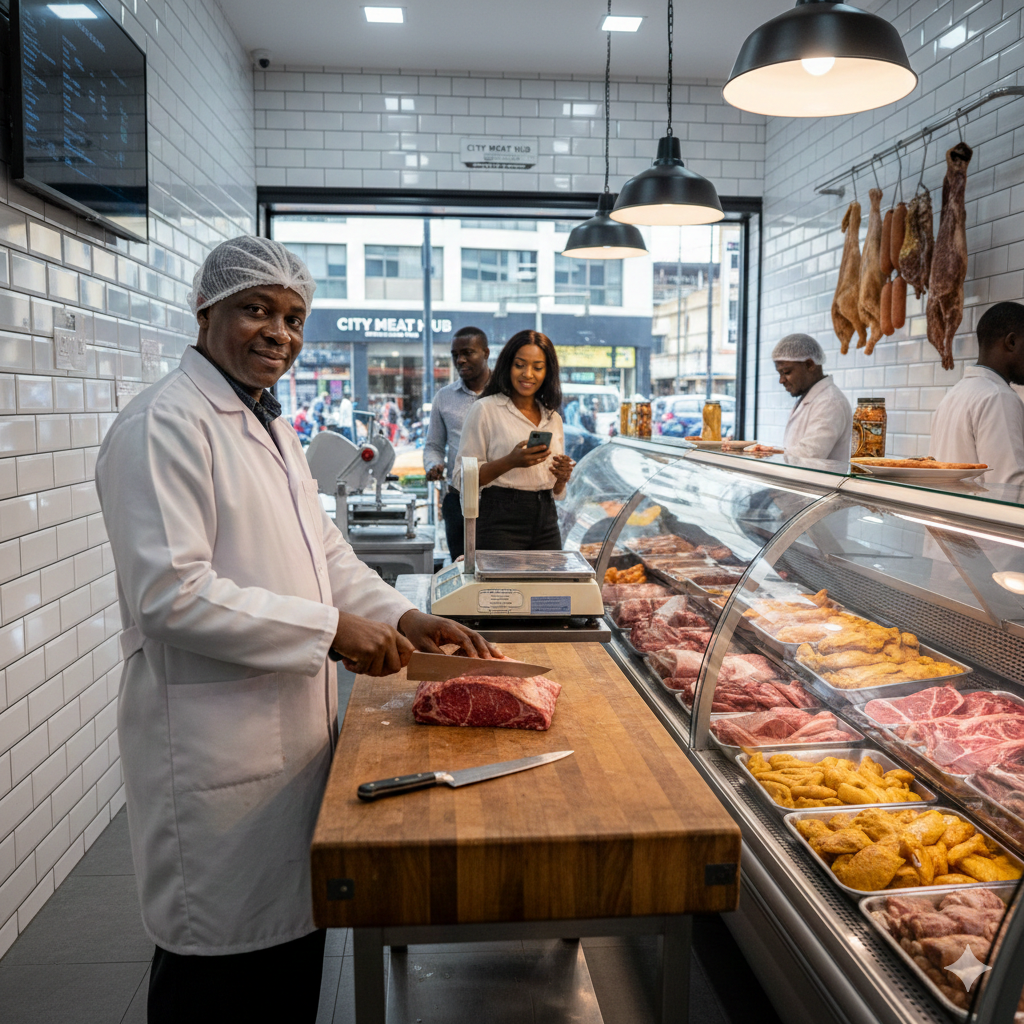
| Display Fridge (Curved Glass) | 80,000 – 180,000 |
| Deep Freezer & Bone Saw | 90,000 – 140,000 |
| Electronic Weighing Scale | 5,000 – 12,000 |
| Total Estimated | 330,000 – 662,000 |
3. What Most People Forget (The “Deep” Insights)
The Margin is in the “Waste”: In a butchery, your profit can literally rot away. If you don’t sell bones, fat trimmings, and offal, you lose 15-20% of your carcass weight. Establish a “bone soup” corner or sell trimmings to pet food processors to stay profitable.
Choosing Your Niche
- The “Estate” Butchery: High volume, low margin. Focuses on beef on bone and goat meat.
- The “Gourmet” Butchery: High margin. Focuses on aged steaks (T-bone, Sirloin), organic chicken, and value-adds like pre-marinated pork chops.
The Cold Chain Integrity
In major cities, power outages can be common. Invest in a small backup generator or a high-quality “chiller” that retains cold for 12+ hours to avoid losing your entire stock in one afternoon.
4. Summary Punchlines
- Location: A spot near a bus terminus or supermarket entrance is 90% of the marketing.
- The “Nyongeza” Culture: Small extras build massive loyalty in Kenyan neighborhoods.
- Digital Presence: 40% of urban meat sales now happen via WhatsApp or Instagram DM. Deliver!